
Habit Stacking: Layer Habits for Effortless Systems
Welcome to our in-depth guide on habit stacking at GoalsToSystems.com! This powerful technique—popularized in modern habit frameworks (for example, James Clear's “Atomic Habits”) and aligned with systems-over-goals thinking—helps you build sustainable routines by attaching new behaviors to existing ones.
Instead of forcing big changes, habit stacking leverages your current daily triggers to create seamless, compounding systems. It makes consistency feel natural and achievable, turning vague goals into reliable processes.
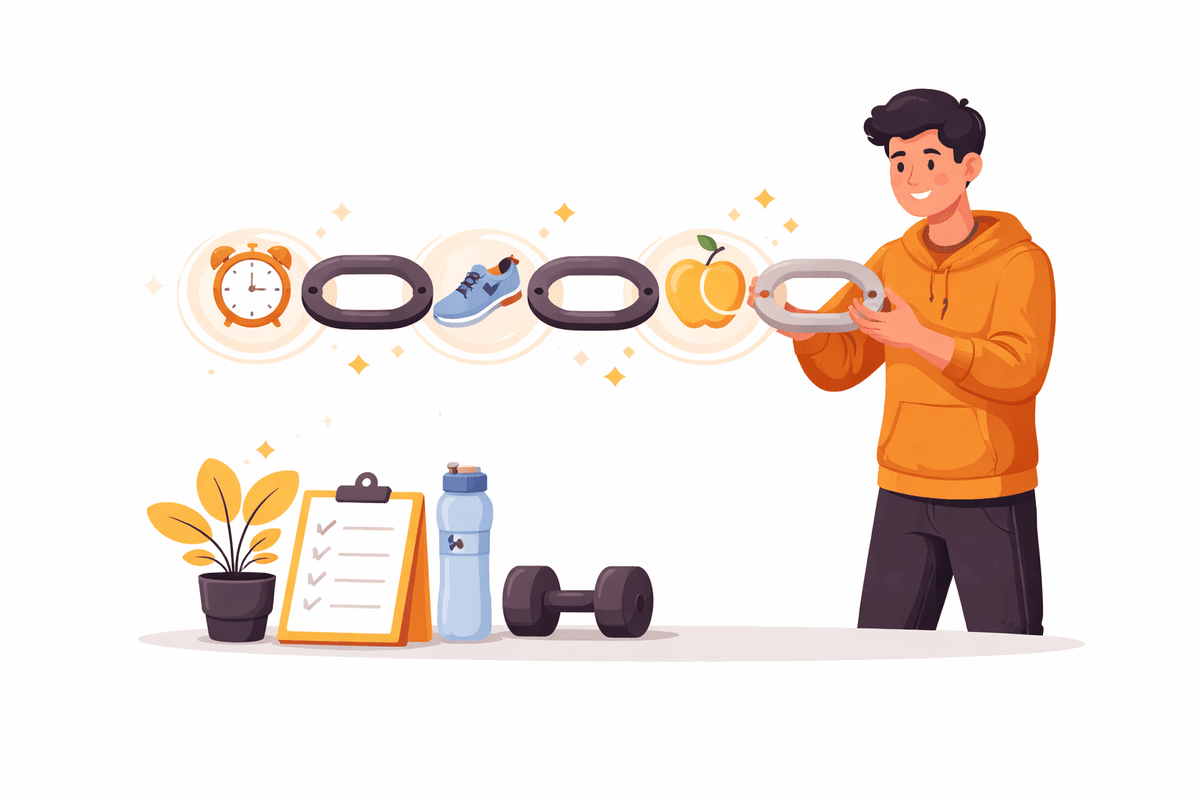
What Habit Stacking Really Means
Habit stacking is the art of linking a new, desired behavior to an established trigger in your routine. The formula is simple: “After [current habit], I will [new habit].” The new action rides on the momentum of something you already do reliably.
The key is starting small. Choose triggers that are automatic (brewing coffee, checking email, or going to bed) and add micro-actions that take minimal effort. Over time, these stacks grow into full systems—without relying on willpower spikes.
This works especially well with cue-based habit loops (cue → response → reward): you're designing the cue on purpose, which makes the behavior easier to repeat.
Why Habit Stacking Helps Build Better Systems
If you're shifting from goals to systems, stacking is a practical way to make execution easier:
- Boosts consistency: piggyback on existing routines so the new habit feels automatic.
- Compounds progress: small stacks add up over time—like interest on a savings account.
- Minimizes willpower drain: the trigger handles the “starting” part, which is often the hardest.
- Enhances adaptability: if a stack doesn't work, tweak the trigger or the action without scrapping the whole plan.
- Reduces overwhelm: shrink actions until they're “too easy to skip,” then build from there.
- Works across categories: career, health, finance, relationships, and personal growth.
Real-World Examples of Habit Stacking
Here are practical illustrations across common categories. Each follows the “After X, I do Y” structure:
- Career / Productivity: After I pour my morning coffee, I review my top 3 priorities.
- Health & Fitness: After I brush my teeth at night, I do 10 bodyweight squats.
- Finance: After I open my banking app, I transfer $10 to savings.
- Personal growth: After I close my laptop for the evening, I read one page of a book.
- Relationships: After dinner, I send one appreciative text to someone I care about.
- Location-specific twist (example):After my commute home, I write one quick gratitude note about the day.
Start with one stack. Once it feels natural, layer another.
How to Apply Habit Stacking in This App
- Enter your goal: start with something like “Improve fitness” or “Boost savings.”
- Clarify for personalization: share your natural triggers (e.g., “I start my day with coffee”).
- Review generated systems: rewrite steps into “After X, I do Y.” If a step feels daunting, shrink Y (e.g., “After coffee, stretch for 2 minutes”).
- Implement and iterate: save to your Dashboard, test for a week, and adjust with real life.
- Combine with other resources: pair this with Energy management or Tracking progress.
Pro tip: limit yourself to 2–3 new stacks at once. Keep them tiny. Once they stick, expand or add another.
If you need a quick calm-down before you start, try Daily Calm AI (everyday wellbeing, not medical advice), then run the smallest version of your next stack.
If you prefer keeping your progress visible as a simple board, try Task Breezer to maintain a tiny “Next / Doing / Done” view for your current system.
Final Thoughts: Stack Your Way to Success
Habit stacking is a low-effort, high-impact way to embody systems thinking. You “win” by running your system—showing up for the process—even when the outcome takes time.
For more guides, return to Resources. Explore Categories for goal-specific ideas or check Examples. Ready to generate your own? Head to the home page.